Understanding Ontario Driver’s Licence Classes and Rules
Choosing the right licence in Ontario means looking beyond the letter or label on the card. Your class matters, but so do any conditions on your licence and the rules for the vehicle you plan to drive. This overview explains how to think through those details and where to confirm the requirements for your situation.
What a driver’s licence class tells you
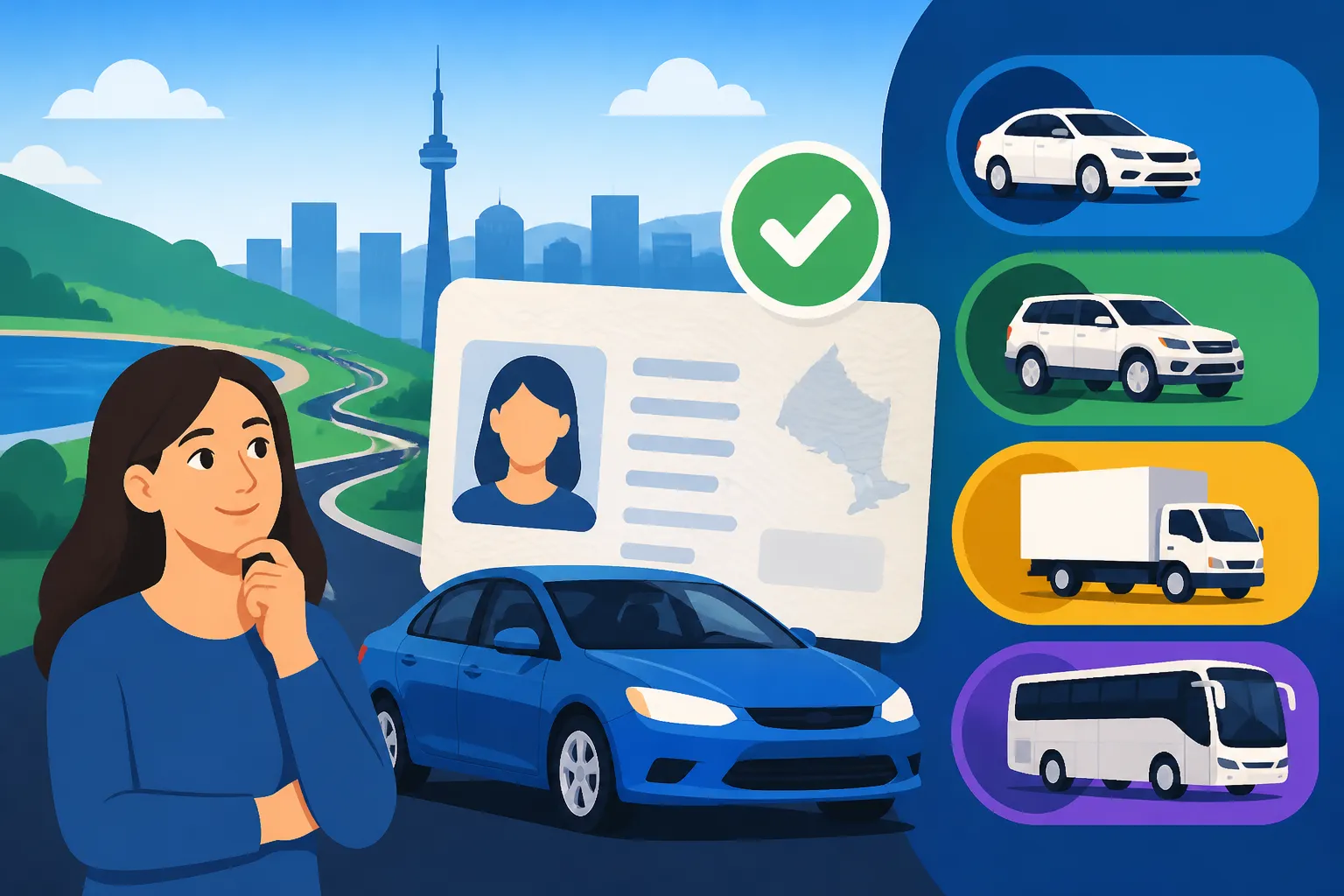
A driver’s licence class identifies the category of driving a licence is intended to cover. In practical terms, it helps answer whether your licence is appropriate for the vehicle and driving activity you have in mind. It is not a general permission to drive every kind of vehicle on the road.
According to ServiceOntario, Ontario issues 15 distinct types of driver’s licences. That variety reflects the fact that drivers have different needs, from everyday personal driving to specialized or commercial work. The right place to start is not with the vehicle that seems most familiar, but with the exact licence class shown on your record and the rules attached to it.
ServiceOntario describes a G driver’s licence as designated for driving a car, van, or small truck in Ontario. If you plan to drive a vehicle in that general category, the G class is an important reference point. But do not assume that every vehicle described informally as a car, van, or truck necessarily fits the same rules. Vehicle size, use, configuration, and the licence holder’s conditions may matter. Confirm the requirements for the specific vehicle rather than relying only on its everyday name.
A useful way to read your licence is to separate three questions:
- What class do I hold? Check the class recorded on your licence or official driver record.
- What conditions apply to me? Look for restrictions or other conditions recorded on the licence, and confirm what each one means.
- What rules apply to this vehicle and use? Verify whether the vehicle’s type, equipment, passenger use, or work purpose changes what is required.
These questions are related, but they are not interchangeable. A vehicle might appear to fit the broad purpose of a class while a condition on the driver’s licence limits how it can be operated. Or the driver’s class may be suitable while a separate requirement applies to the vehicle or the work being done.
If you are comparing classes, avoid treating the labels as a ladder where a higher-looking letter automatically covers everything below it. Classes are categories with defined scopes, not informal rankings. A licence that is appropriate for one vehicle or task may not be appropriate for another, even if both involve driving on public roads.
It also helps to distinguish the licence class from the licence card itself. A replacement card does not, by itself, change the class you hold. A renewal is not necessarily an upgrade. If you need a different class, find out what application, training, testing, or other steps the official process requires. For the general replacement process, see Ontario Driver’s Licence Replacements: Lost Cards and Fees. For a lost card in particular, What to Do at ServiceOntario When Your Licence Card Goes Missing can help you prepare.
How to identify the class that fits your driving
Start with the driving you need to do, not with a class label you heard from someone else. A friend, employer, seller, or vehicle advertisement may use casual descriptions that do not match the wording used in Ontario’s licensing rules. Identify the actual vehicle and how you will use it, then check the official requirements for that combination.
For personal driving, write down the vehicle’s basic details before looking up a class. Note what kind of vehicle it is, how it is configured, and whether you are driving it for personal use or as part of a job. If you are borrowing or renting it, ask for the vehicle details rather than relying on a broad label such as “van” or “small truck.” If the information is unclear, ask the owner or provider to identify the vehicle’s classification and any relevant specifications.
For work-related driving, include the task in your check. Driving a vehicle as part of a job can raise questions beyond the vehicle’s general description. You may need to confirm whether the work involves carrying passengers, transporting goods, operating specialized equipment, or meeting another workplace or vehicle requirement. Do not assume that the vehicle’s owner or employer has already checked your personal licence conditions. Ask what is required and verify it independently.
A practical class-check process looks like this:
- Describe the vehicle precisely. Use the vehicle documents or reliable specifications, not just a nickname or sales description.
- Describe the intended use. Note whether the driving is personal, commercial, passenger-related, or tied to a specialized task.
- Check the class requirement. Use the official Ontario information for that vehicle and use.
- Check your own licence. Read the class and every condition shown on it, and ask the official agency if you do not understand an entry.
- Confirm any additional requirements. A class may not be the only issue; the vehicle, job, or activity may have separate rules.
- Keep the answer with your planning documents. If you are arranging a job, rental, or vehicle purchase, confirm the requirements before committing.
When information from different people conflicts, pause rather than choosing the answer that sounds simplest. For example, a company may tell you that a vehicle can be driven with a particular licence, while your card includes a condition you have not considered. A seller may describe a vehicle in ordinary language, but its configuration could be relevant to the official classification. Ask the official agency to clarify the specific facts rather than asking a broad question such as “Can I drive a truck?”
If your question is about a commercial vehicle, check a commercial class guide instead of relying on general personal-driving information. Guide to Ontario Commercial Driver’s Licence Classes is a useful starting point for understanding the commercial categories and identifying which details you need to confirm. Commercial driving can involve requirements that are not apparent from the vehicle’s appearance alone, so check the complete rules for your intended vehicle and work.
For a motorcycle or another specialized type of driving, use the information for that specific category. Do not infer that a class covering one kind of vehicle also covers a different one simply because both have engines or are used on roads. The correct classification and any required licence conditions need to be confirmed for the actual vehicle.
Conditions, restrictions, and endorsements
The class printed on a licence is only part of the picture. Conditions can limit or shape the way a person may drive, and endorsements or other licence notations may relate to additional qualifications. Their meaning is specific to the licence record. Do not guess at an unfamiliar code, assume it is harmless, or rely on an old explanation that may not describe your current record.
Read the licence carefully and compare it with the official information that explains its entries. If the wording is not clear, ask ServiceOntario or the relevant Ontario driving-test service which office handles the question. ServiceOntario vs DriveTest: Who Handles What for Drivers? can help distinguish the roles involved in common driver transactions. The official agency, not this site or an employer, confirms the meaning and effect of a licence entry.
A condition may be relevant even when the vehicle seems suitable for your class. For example, a restriction recorded on the licence could affect whether you can perform a particular type of driving, or a qualification could be required before a certain activity is allowed. These are examples of why checking the full record matters; they do not describe a specific rule for every driver. Ask about the exact condition shown on your own licence.
Conditions can also affect the steps you need to take when your circumstances change. If you have a new medical or vision concern, a licence entry that you do not understand, or a new driving responsibility, ask whether your existing record remains appropriate. Do not assume that a change in your personal situation automatically updates the licence or removes a restriction. Confirm what information must be reported and what action, if any, is required.
Keep the following habits in mind:
- Read the whole licence, not just the class. Check for visible conditions, codes, or other notations.
- Ask what an unfamiliar entry means. Use the official agency that can interpret the record, rather than guessing from a search result or a colleague’s licence.
- Check again after an official update. If a change is processed, review the updated record or card and raise any apparent error promptly.
- Do not lend your licence or assume someone else’s class applies to you. Licensing eligibility and conditions are tied to the individual driver.
- Keep a record of the answer you receive. Note what situation you asked about and which office gave the clarification, especially if the question affects work or a vehicle transaction.
If your class or conditions appear inconsistent with what you were told, do not drive on the strength of an informal assurance. Get clarification before operating the vehicle. This is especially important when the consequences of a mistaken assumption could include being unable to perform a work assignment, facing a licensing issue, or discovering that a vehicle cannot be used as planned.
A licence is also personal identification, but its identity function does not replace its driving function. Showing a valid card does not prove that a particular vehicle or activity is covered by the class and conditions on it. Treat identity checks, licence status, and permission to operate a specific vehicle as separate questions.
Learner and novice licences
Ontario drivers may encounter learner or novice stages while working toward a licence that permits a broader range of driving. The stages are not interchangeable with a full licence, and the conditions that apply to them need to be checked before driving. Because requirements can depend on the licence stage and the driver’s circumstances, use the current official instructions rather than relying on a general summary.
A learner or novice driver should identify the exact class or stage shown on the licence and check the rules for the planned trip. The relevant questions may include who can supervise, where driving is permitted, who may be in the vehicle, and whether there are limits on when or how the driver can operate a vehicle. These are areas to verify, not assumptions to fill in from memory. A family member’s experience with a past version of the process is not a substitute for checking current requirements.
If you are supporting a new driver, help them make the check themselves. A supervisor can explain how to locate official information, but the learner should understand the conditions that apply before starting the vehicle. A clear routine is more useful than memorizing a fragment of a rule:
- Identify the driver’s current licence stage.
- Check the specific restriction relevant to the planned trip.
- Confirm that the supervising arrangement, vehicle, and passengers are permitted.
- Make sure the driver understands what to do if the planned conditions change.
For a comparison of Ontario’s early licence stages, see Ontario G1 vs. G2 Licences: Understanding the Key Differences. If the driver is beginning the process, Guide to Teen Driver Licensing in Ontario and Getting an Ontario Driver’s Licence as an Adult Beginner address different starting situations. The official instructions remain the place to confirm the current rules for an individual driver.
A change in stage should not be treated as automatic permission to skip the rules that applied before. Check the new licence and its conditions when it is issued, and make sure the driver knows what has changed and what has not. If a card is delayed or a record appears inconsistent, get confirmation from the official agency before assuming the driver may proceed under the new status. Driving While Waiting for Your Renewed Ontario Licence Card addresses the separate question of driving while a replacement or renewed card is in transit.
People also sometimes confuse finishing a course, passing a test, and holding a particular licence. Those steps may be connected, but they are not the same thing. Confirm what has been recorded on the driver’s official file and what licence status applies before relying on a course completion document or a test result.
Commercial and specialized driving
A personal driver’s licence may not be enough for every vehicle used at work. Commercial and specialized driving can involve a different class, additional qualifications, or requirements tied to the vehicle and task. The fact that a person can drive a car or van does not establish that they can drive a commercial vehicle, transport passengers, or operate specialized equipment.
Before accepting a driving job, ask the employer what class and qualifications the position requires. Then check those requirements against your own licence and official Ontario information. This avoids a common planning mistake: treating the job title or vehicle name as the full answer. A position called “delivery driver,” for example, could involve different vehicles and responsibilities in different workplaces. The label alone does not tell you which licence requirements apply.
Before buying or arranging a vehicle for work, confirm the vehicle details as well. Ask for the information needed to identify its classification and intended use. If the vehicle has unusual dimensions, equipment, or passenger capacity, say so when asking the official agency. A vague question may receive a broad answer that does not address the feature that matters in your case.
Employers and fleet managers should also verify that each driver meets the requirements for the actual assignment. A copy of a licence can help with a check, but it should not replace confirmation of the applicable class and conditions. If an employee changes roles or starts using a different vehicle, revisit the question instead of assuming the previous approval still applies.
For commercial questions, use a focused checklist:
- What vehicle will the driver operate?
- What is the vehicle used to carry or do?
- Is the driving personal or part of paid work?
- Does the driver hold the required class and any relevant qualification?
- Are there conditions on the driver’s licence that affect the assignment?
- Does the vehicle or work have separate requirements that need confirmation?
The commercial class reference Guide to Ontario Commercial Driver’s Licence Classes can help you frame those questions. For a specialized qualification, check the specific Ontario rules for that qualification rather than assuming it is included with a general commercial class. Some requirements may relate to the driver’s licence, while others may apply to the vehicle, employer, or activity.
If you are moving from personal driving into commercial work, treat the change as a new licensing check. Do not rely on having driven a similar-looking vehicle privately. Ask what class is required, what evidence of eligibility is needed, and which official service handles each step. If a test or application is involved, complete it through the official agency.
Applying, testing, upgrading, and renewing
A licence class can change when a driver completes an official process, but the exact steps depend on the class and the driver’s circumstances. Before starting, identify the outcome you need: a first licence, an upgrade, a renewal, a replacement card, or an update to a licence record. These are different requests, and the process for one should not be assumed to work for another.
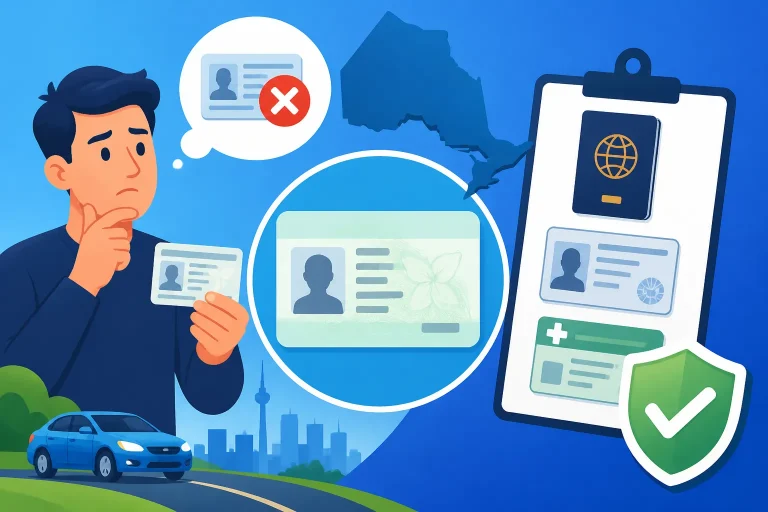
For a first licence or an upgrade, check the official requirements for the class you want. Confirm the application process, acceptable documents, tests or training, and any eligibility conditions. Gather information before booking or travelling to an office, because an incomplete application can mean another visit or a delay. Accepted ID Documents When Applying for an Ontario Driver’s Licence can help you prepare identity documents, while Preparing for Counter Desks: Document Checklists Before You Visit offers broader preparation advice for an in-person service.
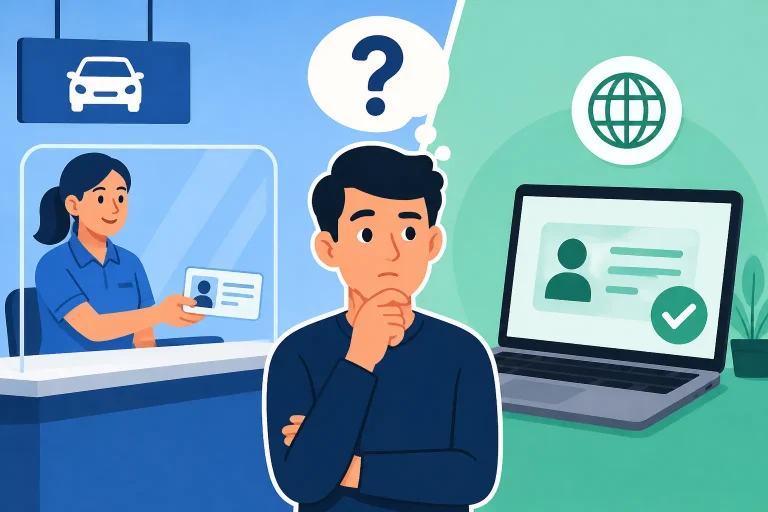
If testing is part of the process, make sure you know which service handles the test and what to bring. Do not assume that the counter responsible for a licence transaction also administers every test. ServiceOntario vs DriveTest: Who Handles What for Drivers? explains how to distinguish these services. If you need an appointment, testing, or a road test, follow the official booking instructions and confirm the details before travelling.
A renewal is different from an upgrade. Renewing a licence generally concerns continuing or updating an existing licence record, whereas an upgrade involves seeking permission for a different class or driving category. The steps, documents, and tests may not be the same. For renewal planning, see Ontario Driver’s Licence Renewals: Rules, Fees, and Steps. If the licence has already expired, check the specific rules for that situation rather than assuming the ordinary renewal process applies; Renewing an Expired Driver’s Licence in Ontario: What Is Required covers that issue.
A replacement is different again. If the card is lost, stolen, or damaged, the task is to replace the card, not to apply for a new class. Make sure the request is being handled as a replacement and check whether you need identification or other information. A replacement card does not resolve a separate question about licence status or conditions. The relevant guidance is Ontario Driver’s Licence Replacements: Lost Cards and Fees.
Before submitting any application, review the information for accuracy. Check your name, address, and other required details, and ask how to correct an error if the record does not match your documents. Do not try to solve an unclear record by selecting a different service or making an assumption about what the system means. A correction may require a different process from renewal or replacement.
Keep a simple file of the documents and confirmations connected with your request. That can include appointment details, test results, official correspondence, and any instructions about conditions or next steps. Store only what is useful and protect personal information. When the updated card or record arrives, check that the class and any relevant entries reflect the result you expected. If something appears wrong, ask the official agency how to correct it.
A practical check before driving
Before driving a vehicle, make the decision using the actual licence, actual vehicle, and actual purpose of the trip. This is more reliable than relying on a general rule remembered from a previous job, a family member’s experience, or the vehicle’s informal description.
Use this quick review:
- Licence: Is your licence current, and what class does it show?
- Conditions: Are there restrictions or entries that could affect this trip?
- Vehicle: What is the vehicle’s actual type and configuration?
- Purpose: Is the trip personal, work-related, passenger-related, or specialized?
- Additional rules: Do the vehicle or activity require anything beyond the licence class?
- Confirmation: If an answer is unclear, have you checked with the official Ontario agency that handles the question?
The table below summarizes how to use those checks. It is a planning aid, not a substitute for the official class rules.
| What you are checking | What to establish | Where to verify |
|---|---|---|
| Licence class | The exact class recorded for you | Your licence record and official Ontario licensing information |
| Licence conditions | The meaning and effect of each entry | ServiceOntario or the official service responsible for the entry |
| Vehicle | Its accurate type and relevant specifications | Vehicle documents, owner, employer, or vehicle provider |
| Driving purpose | Whether the use is personal, commercial, or specialized | The official rules for the specific activity |
| Application or test | Which process and service apply | The official Ontario instructions for that transaction |
| Renewal or replacement | Whether you need to renew, replace, or change a class | The specific official process for that request |
If you are uncertain, do not treat the absence of a warning from a rental company, employer, or vehicle owner as confirmation. Ask the person responsible for the vehicle for accurate details, then check the licensing requirement through the official agency. If your licence contains an entry you do not understand, resolve that question before driving.
This check is particularly valuable when circumstances change. A new vehicle, job, licence stage, condition, or intended use can change which rules you need to consider. Recheck rather than assuming that an earlier answer still applies. Keep the question specific so the official agency can respond to the facts that matter.
Frequently Asked Questions
Does a G licence cover every car, van, or truck?
ServiceOntario describes a G driver’s licence as designated for driving a car, van, or small truck in Ontario. The vehicle’s specific characteristics, intended use, and any conditions on your licence can still matter. Confirm the requirements for the vehicle you plan to drive.
How many types of driver’s licences does Ontario issue?
According to ServiceOntario, Ontario issues 15 distinct types of driver’s licences. Check the official information for the specific class you need rather than assuming that a general licence covers every vehicle or activity.
Are licence conditions separate from the class?
Yes. The class and the conditions recorded on your licence are separate details to check. If an entry is unclear, ask the official agency responsible for interpreting or updating your record.
Does renewing a licence upgrade its class?
Do not assume that renewal changes your class. A renewal, replacement, and class upgrade are different requests. Confirm which process applies to your goal with the official agency.
Sources
- ServiceOntario — Driver’s licence | ontario.ca (checked November 11, 2026)
- ServiceOntario — Get a G driver’s licence: new drivers | ontario.ca (checked November 11, 2026)
- ServiceOntario — Get a G driver’s licence: new drivers | ontario.ca (checked November 11, 2026)
Disclaimer
This article is for general informational purposes only and does not constitute professional advice. Laws, prices and regulations vary by location and change over time. Consult a qualified professional for guidance on your specific situation. Ontario Driver Guide is not a government agency and is not affiliated with any provincial motor vehicle department.